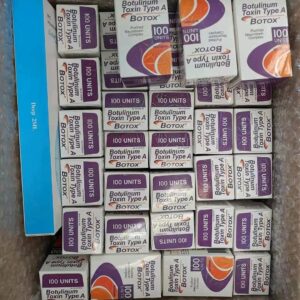
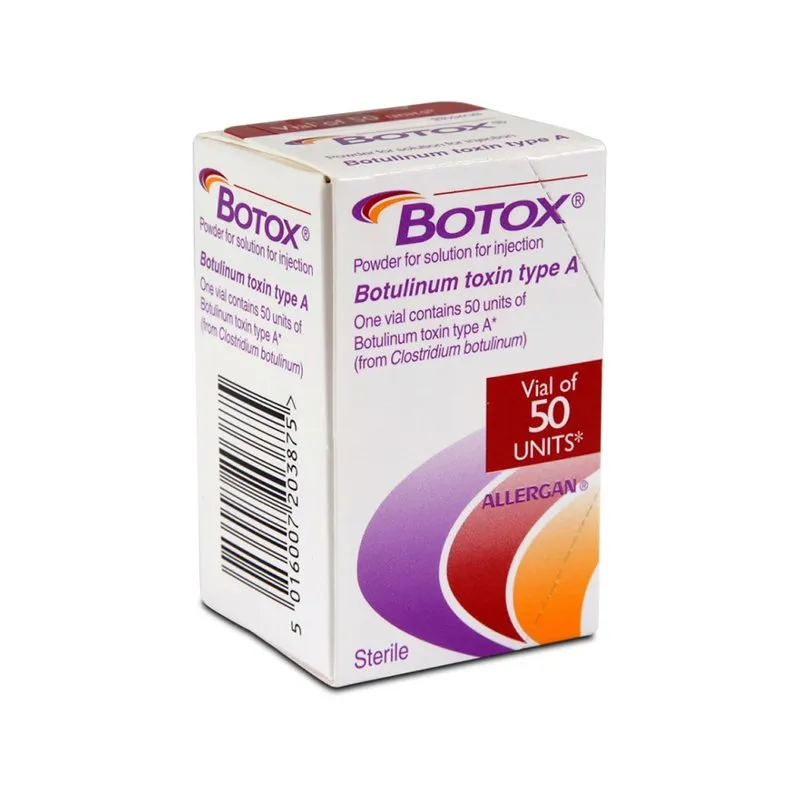

Botox(100units)
Original price was: £150.00.£140.00Current price is: £140.00.
What is BOTOX® injection?
The injection contains a muscle relaxant obtained from the bacterium Clostridium botulinum.
What is in BOTOX® injection?
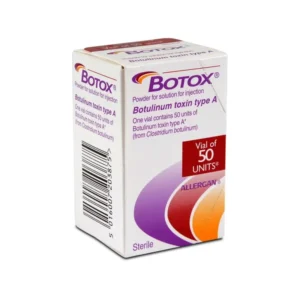
Each vial contains either 50 units (U), 100 U or 200 U of Clostridium botulinum toxin type A haemagglutinin complex as the active ingredient. It also contains human albumin and sodium chloride.
What it looks like?
The injection is supplied as a sterile white vacuum-dried powder in a clear glass vial. It is diluted before use with non-preserved, sterile 0.9% w/w sodium chloride injection.
How BOTOX® injection works
BOTOX® works by temporarily relaxing overactive or spastic (contracting) muscles. BOTOX® can also block signals to the sweat glands thus reducing excessive sweating (hyperhidrosis), and can also block the release of chemicals in the brain associated with the cause of pain (chronic migraine). When injected into the bladder wall, BOTOX® works on the bladder muscle to prevent leakage of urine (urinary incontinence).
It is used to treat medical conditions associated with overactive muscles:
- causing excessive eyelid blinking (blepharospasm) in patients twelve years and over
- of the face (hemifacial spasm and VIIth nerve disorders) in patients twelve years and over
- causing ‘lazy eye’ or squint (strabismus) in patients twelve years and over
- in the throat, causing a strained, strangled sounding voice or breathy voice with voice loss (spasmodic dysphonia)
- causing the head to be in an unusual posture or pain in the neck associated with twisting of the head (cervical dystonia)
- in children aged two years and older, causing altered and unnatural position or movements in the hand and arm as well as legs, including those muscles that cause abnormal ankle position and walking gait (juvenile cerebral palsy)
- in adults, causing focal spasticity in the hands, arms or legs (adult focal spasticity).
BOTOX® is also used:
- to treat overactive bladder in adults with leakage of urine (urinary incontinence), the sudden urge to empty your bladder and needing to go to the toilet more than usual when another drug (called an anticholinergic) did not help. BOTOX® has been shown to markedly reduce leakage of urine and improve the quality of life of patients suffering from leakage of urine due to overactive bladder.
- to treat leakage of urine (urinary incontinence) in adults with overactive bladder due to neurologic disease. BOTOX® has been shown to reduce leakage of urine and improve the quality of life of patients suffering from leakage of urine due to neurogenic bladder.
- to treat headaches occurring in adults with chronic migraine
- to treat excessive sweating from the armpit area
- to improve the look of vertical frown lines that appear between the eyebrows, lines around the eyes and on the forehead in adults.
Description
What is BOTOX® injection?
The injection contains a muscle relaxant obtained from the bacterium Clostridium botulinum.
What is in BOTOX® injection?
Each vial contains either 50 units (U), 100 U or 200 U of Clostridium botulinum toxin type A haemagglutinin complex as the active ingredient. It also contains human albumin and sodium chloride.
What it looks like?
The injection is supplied as a sterile white vacuum-dried powder in a clear glass vial. It is diluted before use with non-preserved, sterile 0.9% w/w sodium chloride injection.
How BOTOX® injection works
BOTOX® works by temporarily relaxing overactive or spastic (contracting) muscles. BOTOX® can also block signals to the sweat glands thus reducing excessive sweating (hyperhidrosis), and can also block the release of chemicals in the brain associated with the cause of pain (chronic migraine). When injected into the bladder wall, BOTOX® works on the bladder muscle to prevent leakage of urine (urinary incontinence).
It is used to treat medical conditions associated with overactive muscles:
- causing excessive eyelid blinking (blepharospasm) in patients twelve years and over
- of the face (hemifacial spasm and VIIth nerve disorders) in patients twelve years and over
- causing ‘lazy eye’ or squint (strabismus) in patients twelve years and over
- in the throat, causing a strained, strangled sounding voice or breathy voice with voice loss (spasmodic dysphonia)
- causing the head to be in an unusual posture or pain in the neck associated with twisting of the head (cervical dystonia)
- in children aged two years and older, causing altered and unnatural position or movements in the hand and arm as well as legs, including those muscles that cause abnormal ankle position and walking gait (juvenile cerebral palsy)
- in adults, causing focal spasticity in the hands, arms or legs (adult focal spasticity).
BOTOX® is also used:
- to treat overactive bladder in adults with leakage of urine (urinary incontinence), the sudden urge to empty your bladder and needing to go to the toilet more than usual when another drug (called an anticholinergic) did not help. BOTOX® has been shown to markedly reduce leakage of urine and improve the quality of life of patients suffering from leakage of urine due to overactive bladder.
- to treat leakage of urine (urinary incontinence) in adults with overactive bladder due to neurologic disease. BOTOX® has been shown to reduce leakage of urine and improve the quality of life of patients suffering from leakage of urine due to neurogenic bladder.
- to treat headaches occurring in adults with chronic migraine
- to treat excessive sweating from the armpit area
- to improve the look of vertical frown lines that appear between the eyebrows, lines around the eyes and on the forehead in adults.
Related products
-
- Sale!
- Botulinums
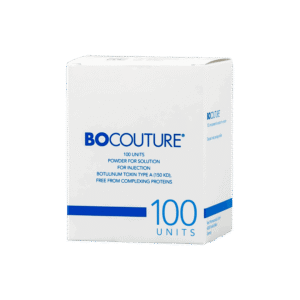
Bocouture (100units) single vial
- Original price was: £130.00.£125.00Current price is: £125.00.
- Add to cart
-
- Sale!
- Botulinums
Botox(50units)
- Original price was: £80.00.£75.00Current price is: £75.00.
- Add to cart
-
- Sale!
- Botulinums
Bocouture (50units)
- Original price was: £70.00.£65.00Current price is: £65.00.
- Add to cart